Rare Books
The primitive medicine-man
Image not available
You might also be interested in
Image not available
The primitive medicine man's virtues. : His knowledge and his faith in himself
Rare Books
605849
Image not available
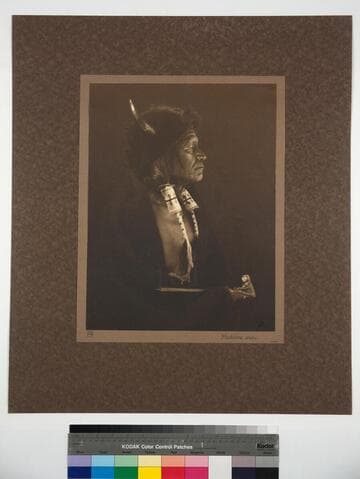
Comanche Medicine Man
Visual Materials
A disbound album of primarily portrait photographs of Plains Indians, taken by photographer William E. Irwin from the 1890s to early 1900s, in Indian Territory. His images document the Chiricahua Apache, Comanche, and Kiowa Indians who lived near Anadarko and Fort Sill, Oklahoma; some photographs may have been taken at Irwin's studio at Chickasha, Indian Territory. Besides the studio and field portraits, there are also candid views illustrating late 19th-century Plains Indians in their daily lives; several views of cowboys and cow herding; Fort Sill; tepees; landscapes; and one view of a Wichita Indian grass house or wickiup. Notable portraits include those of Geronimo, seated, posing with headdress and revolver; Appeahtone (Kiowa Chief) and his wife; and Quanah Parker (Comanche Chief) with two of his wives. Many of the photographs focus on Comanche and Kiowa Indians posing for studio portraits. These portraits depict infants and children, young women, mothers, scouts, and warriors, many identified by name. Named individuals include Poor Buffalo, White Buffalo, Lone Wolf, and Little White Shield, among others. Field photographs show Apache, Kiowa, and Comanche encampments; a Wichita grass house; both cowboys and Indians caring for their herds; and views in and around Anadarko and Fort Sill, Oklahoma.
photCL 161