Visual Materials
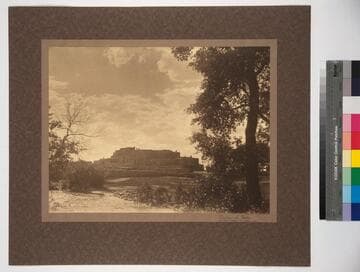
Taos Pueblo, South
You might also be interested in
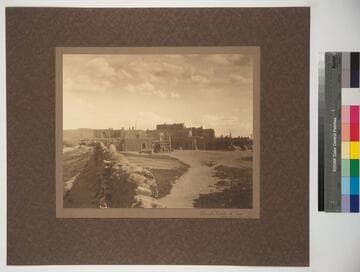
South Pueblo of Taos. Showing part of ancient wall
Visual Materials
View of pueblo with hornos in front of dwellings and a wall in the foreground.
photCL 313
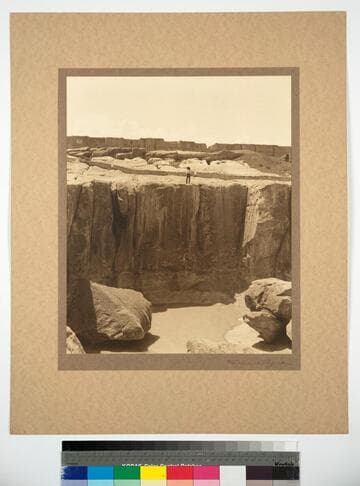
The water source for the pueblo of Acoma
Visual Materials
A man standing on a cliff above a pool of water, with the pueblo behind.
photCL 312
Image not available
Taos Pueblo
Visual Materials
This collection contains approximately 10,000 photographs, negatives and ephemera created or compiled by Grace Nicholson (1877-1948), a collector and dealer of Native American and Asian arts and crafts in Pasadena, California. The bulk of the collection dates from 1903 to the 1920s and includes photograph albums and individual photographs with views of Native Americans of the Northwest Coast, California, and the Southwest of North America; pictures documenting Nicholson's basket collecting trips primarily between 1902 and 1912; images of Nicholson's stores and residences in Pasadena, including the building of the "Grace Nicholson Treasure House of Oriental Art" in the mid-1920s; and personal photographs of Nicholson, her family, friends, and associates. Nicholson's personal snapshots and photograph albums provide a valuable resource for studying Native American communities, particularly in Northern California, in the early 20th century. Many of the photographs depict daily life and include images of homes, community events, dances and rituals, families and children, and portraits. Most of these photographs were taken by Grace Nicholson or her assistant, Mr. Carroll S. Hartman, and are often accompanied by Nicholson's handwritten identifications.
photCL 56
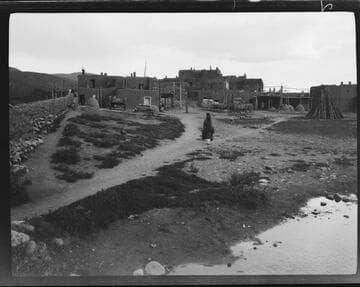
Image not available
North Pueblo of Taos
Visual Materials
This collection of photographs documents Native Americans living in Arizona, New Mexico and Oklahoma between 1904 and 1917. The primary tribes represented are Hopi, Navajo and Taos Pueblo Indians, but there are also Osage, Apache and several other Southwestern tribes. There are many portraits, as well as posed, romantic scenes depicting storytelling, hunting, weaving, or playing instruments. Additional candid views show people in their daily activities, pueblos, and dance ceremonies. In a letter to Henry Huntington, Feb. 12, 1923, Moon describes these photographs as "a complete collection of my Indian pictures made from the beginning of my work in 1904 to 1917. It includes ... the pick of the Fred Harvey collection that I made for them during the period of my contract with them, 1907 to 1914, and my own collection made since the latter date." Besides the portraits, there are scenes of Indians in their daily activities, including baking bread in outdoor ovens, gathering water in pots, riding horses and tending livestock. There are also views of the Hopi Snake Dance, and the Corn Dance at Santo Domingo.
photCL 313
Image not available
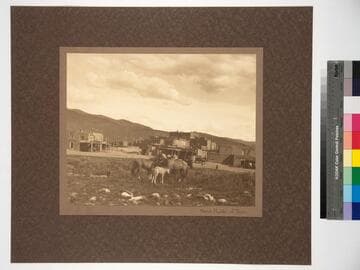
Pueblo of Taos. Taos was formerly a walled town
Visual Materials
This collection of photographs documents Native Americans living in Arizona, New Mexico and Oklahoma between 1904 and 1917. The primary tribes represented are Hopi, Navajo and Taos Pueblo Indians, but there are also Osage, Apache and several other Southwestern tribes. There are many portraits, as well as posed, romantic scenes depicting storytelling, hunting, weaving, or playing instruments. Additional candid views show people in their daily activities, pueblos, and dance ceremonies. In a letter to Henry Huntington, Feb. 12, 1923, Moon describes these photographs as "a complete collection of my Indian pictures made from the beginning of my work in 1904 to 1917. It includes ... the pick of the Fred Harvey collection that I made for them during the period of my contract with them, 1907 to 1914, and my own collection made since the latter date." Besides the portraits, there are scenes of Indians in their daily activities, including baking bread in outdoor ovens, gathering water in pots, riding horses and tending livestock. There are also views of the Hopi Snake Dance, and the Corn Dance at Santo Domingo.
photCL 313