Visual Materials
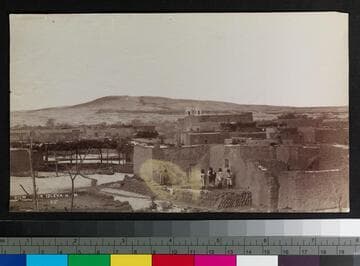
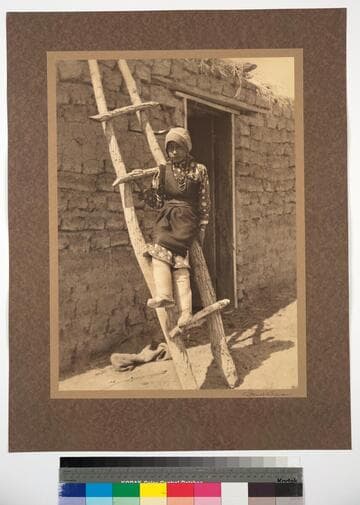
Pueblo Boys, Isleta, New Mexico
You might also be interested in
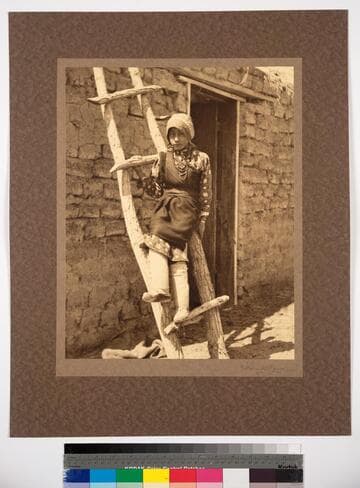
Maria Abeyeta, a girl of the Pueblo of Isleta, New Mexico
Visual Materials
Isleta Indian girl sitting on a ladder.
photCL 312
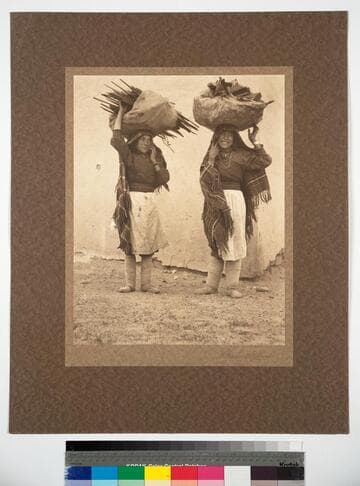
Two young women of Isleta Pueblo carrying bundles of wood on their heads
Visual Materials
Two Isleta girls standing in front of a pueblo building with large bundles of wood balanced on their heads.
photCL 312
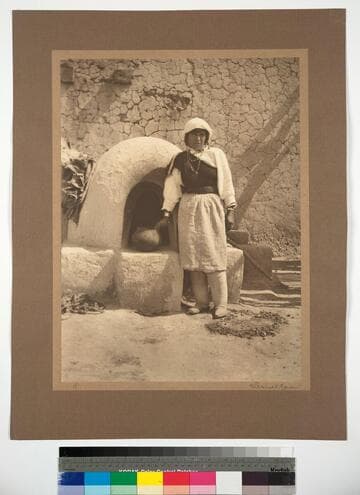
Isleta, New Mexico. Showing estufa or Spanish oven introduced by the Spaniards and now used by all the Rio Grande Indians
Visual Materials
An Isleta Indian woman standing in front of an oven.
photCL 312
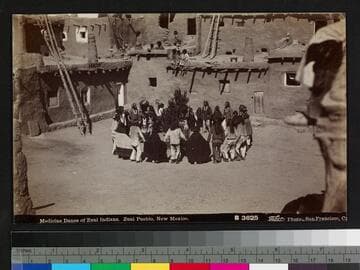
Medicine Dance of Zuni Indians, Zuni Pueblo, New Mexico
Visual Materials
Men and women standing in a circle around a tree, in Zuni Pueblo.
photCL 215 (41)

The Vega at Castle Rock
Manuscripts
Black and white photograph of three men standing in middle distance in tall prairie grass, hills beyond. All three men are wearing dark suits and hats. Typed caption on verso reads: "The Vega at Castle Rock."
mssLAT 01450
Image not available
"Pueblo – Isleta New Mexico"
Manuscripts
HM 81548: The first volume, written in ink, consists of miscellaneous reports prepared by Frank West. The volume begins with a report about a transportation march from Camp Supply, Indian Territory to Fort Clark, Texas in 1873. West meticulously details the journey of the cavalry including length of travel, rivers crossed, and personal remarks. "Our wagon was [?] in the quick sand at the crossing of the Red River men were disseminated and applied to ropes attached to the wagon and it was drawn out" (p. 2). The total distance of their march was 1,371 miles, which took 74 days. The next two reports are about the murder of Jacob Dilsey in 1873. Other reports include number of utility poles erected in Arizona and confidential statements and endorsements about various Army personnel. Also included are briefs from Fort Niobrara, Nebraska and Fort Myer, Virginia. The last portion of the volume appears to be excerpts from a history book concerning Europe, Asia, and the Middle East during the 19th century. The endpapers have miscellaneous notes and account information written on them.
mssHM 81548-81554