Visual Materials
Snake Priest Circling in Front of Kisi (Kiva?). Hopi Snake Dance, ca. 1898

You might also be interested in
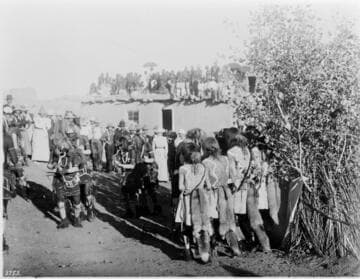
Priests with snakes in mouth. Hopi Snake Dance
Visual Materials
A view of dancing Hopi priests with snakes in their mouths dancing in front of another row of Hopi men. In the background are Anglo and Hopi spectators some sitting on a roof.
photCL Pierce 02029
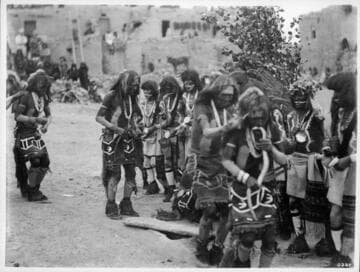
Snake Dance at Oraibi, 1898
Visual Materials
A view of Hopi priests with snakes in their mouths dancing n front of a row of Hopi men. There are Anglo and Indian specators in the background
photCL Pierce 02053
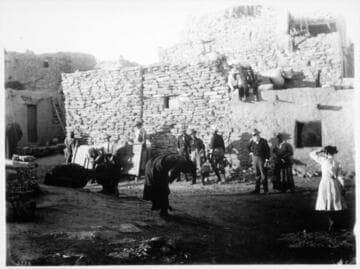
Finis After the Emetric; Hopi Snake Dance, ca. 1898
Visual Materials
A view of the Hopi Priests vomiting after the emetic took effect.
photCL Pierce 02019
Image not available
Antelope priests chanting in front of the kisi at the Antelope or Corn Dance, which takes place on the evening before the Snake Dance. Mishongnovi, Hopi Indian Reservation, Arizona
Visual Materials
The photographs in this collection depict Hopi natives and their families; the Hopi villages of Oraibi and Mishongnovi; the Snake Dance; the Antelope Dance; the Blue Flute Ceremony; the race before the Snake Dance; initiation ceremonies into the Snake Society; kivas; the altar of the Blue Flute Society; preparations for the Blue Flute Ceremony; and crypts (in which smallpox victims were burned) being used as a storage area. There are also photographs of Earle R. Forrest traveling through Arizona and Louis Akin observing the Snake Dance ceremony. A photograph of an amphitheater in Wupatki National Monument and a photograph of a stone serpent head at a temple of Quetzalcoatl in San Juan Teotihuacán, Mexico are included. It appears from the photo captions that Forrest placed these photos in the collection to help explain the origins of the Hopi Snake Dance.
photCL 126
Image not available
Snake priests descending into the Snake kiva on the edge of the dance plaza after the Snake race in the early morning of the Snake Dance. Old Oraibi, Hopi Indian Reservation, Arizona
Visual Materials
The photographs in this collection depict Hopi natives and their families; the Hopi villages of Oraibi and Mishongnovi; the Snake Dance; the Antelope Dance; the Blue Flute Ceremony; the race before the Snake Dance; initiation ceremonies into the Snake Society; kivas; the altar of the Blue Flute Society; preparations for the Blue Flute Ceremony; and crypts (in which smallpox victims were burned) being used as a storage area. There are also photographs of Earle R. Forrest traveling through Arizona and Louis Akin observing the Snake Dance ceremony. A photograph of an amphitheater in Wupatki National Monument and a photograph of a stone serpent head at a temple of Quetzalcoatl in San Juan Teotihuacán, Mexico are included. It appears from the photo captions that Forrest placed these photos in the collection to help explain the origins of the Hopi Snake Dance.
photCL 126
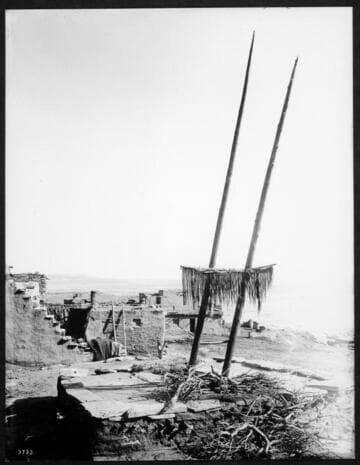
Entrance to the Kiva, Hopi Snake Dance
Visual Materials
A view of the ladder down into the kiva with Hopi houses in the background.
photCL Pierce 02022