Visual Materials
Studio portraits of Native Americans of New Mexico and scenes of Santa Fe, New Mexico and surrounding territory
You might also be interested in
Image not available
Photograph of the Corpus Christi Feast Day Procession in Santa Fe, New Mexico
Visual Materials
A cabinet photograph showing the Feast of Corpus Christi procession on San Francisco Street, adjacent to the plaza in Santa Fe, New Mexico. The photograph shows people carrying banners, onlookers along the plaza, and the town's buildings. The back of the mount has printed historical information about Santa Fe and advertisements for the Denver & Rio Grande Railroad and the Santa Fe Southern Railway. The photographer may be Dana B. Chase, who had a studio in Santa Fe and produced photographs with the same printed information on the back.
photPF 26013
Image not available
Birds-eye-view of Santa Fe, New Mexico
Visual Materials
Photographs made by Adam Clark Vroman, ca. 1892-1909, spanning various subjects, primarily his bookstore in Pasadena, California, and scenes from his travels. Of particular significance is Vroman's handwritten journal of a trip to see the Snake Dance at Walpi, Arizona, in 1895, written sequentially on the back of 19 mounted photographs. Vroman's traveling companions were Horatio N. Rust, Mrs. Thaddeus (Leontine) Lowe, and Charles J. Crandall, who are shown, along with Vroman, at pueblos, and traveling with supplies and wagons. There are also views of the Grand Canyon and the Petrified Forest. The California images include scenery and travelers in the San Gabriel Mountains, Mount Wilson, Mount Lowe and the Alpine Tavern, and travelers having a picnic; details of missions; historic adobes of Monterey; Rancho Guajome Adobe in San Diego County; Yosemite and one view of Indians living in Yosemite Valley. Locations depicted in other parts of the United States are: Manitou, Colorado; Oregon, Illinois; Niagara Falls; Grant's Tomb; a bird's-eye-view of Santa Fe, New Mexico; and other miscellaneous views. Vroman travelled to Japan in 1903 and 1909, and eight prints in the collection show Japanese men and women in traditional dress, as well as details of architecture. Vroman appears in a few photographs. There are several portraits of Pueblo Indian men, some identified in Vroman's captions.
photCL 86
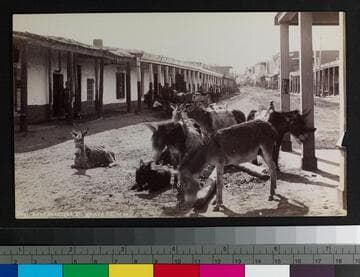
Image not available
Zuni, New Mexico
Visual Materials
This set of photographs by Frederick Monsen focuses on Native Americans of the Southwest in mostly candid views taken in Pueblo communities, approx. 1886-1911. Photographs include portraits, ceremonies, dances, pueblos, livestock and scenes of daily activities. A smaller portion of the collection consists of landscapes, cliff-dwellings, ruins, gold miners, wagons and scenes of pioneer life in the West. Some photographs were made by Monsen while he was with U.S. Geological Surveys (including the Brown-Stanton survey of 1889), and others during his own photography trips. The majority of Native Americans pictured are Hopi and Navajo, but there are also Paiute, Apache, and Pueblo Indians. There are a few views of Mojave Indians of Southern California, and natives of Baja, Mexico. There are several views of Indian children, shown with and without clothes, in their daily activities. Scenes of non-Indian Western life include men in covered wagons on trails, gold prospectors and stagecoaches. There are many artistic landscape views of canyons, buttes and mesas; Death Valley; salt beds; ancient ruins; cactus and other desert plants. Unusual subjects of note are three photographs of skeletons in the deserts of Arizona and one view of the covered bodies of prospectors being carried on burros. The prints are all signed by Monsen and have typed or handwritten captions on the back, written by Monsen.
photCL 312
Image not available
The Pueblo of Acometa, New Mexico
Visual Materials
This set of photographs by Frederick Monsen focuses on Native Americans of the Southwest in mostly candid views taken in Pueblo communities, approx. 1886-1911. Photographs include portraits, ceremonies, dances, pueblos, livestock and scenes of daily activities. A smaller portion of the collection consists of landscapes, cliff-dwellings, ruins, gold miners, wagons and scenes of pioneer life in the West. Some photographs were made by Monsen while he was with U.S. Geological Surveys (including the Brown-Stanton survey of 1889), and others during his own photography trips. The majority of Native Americans pictured are Hopi and Navajo, but there are also Paiute, Apache, and Pueblo Indians. There are a few views of Mojave Indians of Southern California, and natives of Baja, Mexico. There are several views of Indian children, shown with and without clothes, in their daily activities. Scenes of non-Indian Western life include men in covered wagons on trails, gold prospectors and stagecoaches. There are many artistic landscape views of canyons, buttes and mesas; Death Valley; salt beds; ancient ruins; cactus and other desert plants. Unusual subjects of note are three photographs of skeletons in the deserts of Arizona and one view of the covered bodies of prospectors being carried on burros. The prints are all signed by Monsen and have typed or handwritten captions on the back, written by Monsen.
photCL 312
Image not available
The Witches Rocks, Acoma, New Mexico
Visual Materials
This set of photographs by Frederick Monsen focuses on Native Americans of the Southwest in mostly candid views taken in Pueblo communities, approx. 1886-1911. Photographs include portraits, ceremonies, dances, pueblos, livestock and scenes of daily activities. A smaller portion of the collection consists of landscapes, cliff-dwellings, ruins, gold miners, wagons and scenes of pioneer life in the West. Some photographs were made by Monsen while he was with U.S. Geological Surveys (including the Brown-Stanton survey of 1889), and others during his own photography trips. The majority of Native Americans pictured are Hopi and Navajo, but there are also Paiute, Apache, and Pueblo Indians. There are a few views of Mojave Indians of Southern California, and natives of Baja, Mexico. There are several views of Indian children, shown with and without clothes, in their daily activities. Scenes of non-Indian Western life include men in covered wagons on trails, gold prospectors and stagecoaches. There are many artistic landscape views of canyons, buttes and mesas; Death Valley; salt beds; ancient ruins; cactus and other desert plants. Unusual subjects of note are three photographs of skeletons in the deserts of Arizona and one view of the covered bodies of prospectors being carried on burros. The prints are all signed by Monsen and have typed or handwritten captions on the back, written by Monsen.
photCL 312
Image not available
Young girl of Isleta, New Mexico
Visual Materials
This set of photographs by Frederick Monsen focuses on Native Americans of the Southwest in mostly candid views taken in Pueblo communities, approx. 1886-1911. Photographs include portraits, ceremonies, dances, pueblos, livestock and scenes of daily activities. A smaller portion of the collection consists of landscapes, cliff-dwellings, ruins, gold miners, wagons and scenes of pioneer life in the West. Some photographs were made by Monsen while he was with U.S. Geological Surveys (including the Brown-Stanton survey of 1889), and others during his own photography trips. The majority of Native Americans pictured are Hopi and Navajo, but there are also Paiute, Apache, and Pueblo Indians. There are a few views of Mojave Indians of Southern California, and natives of Baja, Mexico. There are several views of Indian children, shown with and without clothes, in their daily activities. Scenes of non-Indian Western life include men in covered wagons on trails, gold prospectors and stagecoaches. There are many artistic landscape views of canyons, buttes and mesas; Death Valley; salt beds; ancient ruins; cactus and other desert plants. Unusual subjects of note are three photographs of skeletons in the deserts of Arizona and one view of the covered bodies of prospectors being carried on burros. The prints are all signed by Monsen and have typed or handwritten captions on the back, written by Monsen.
photCL 312